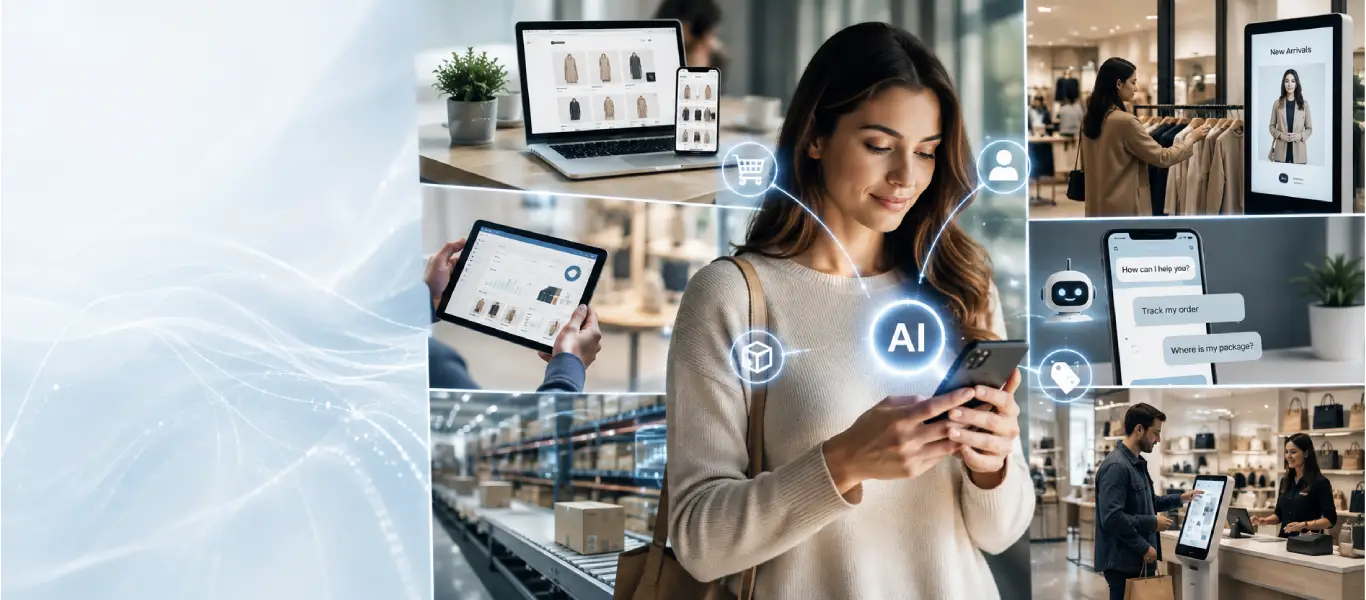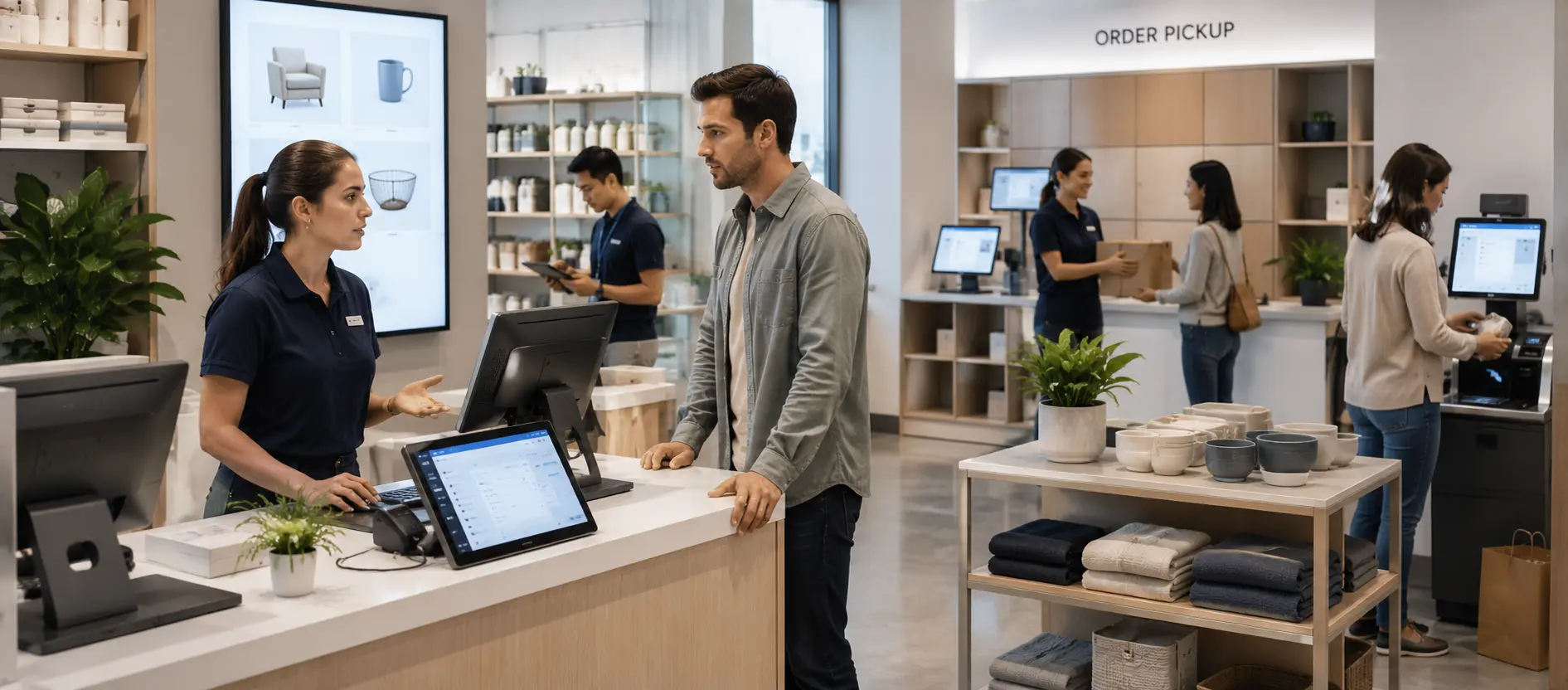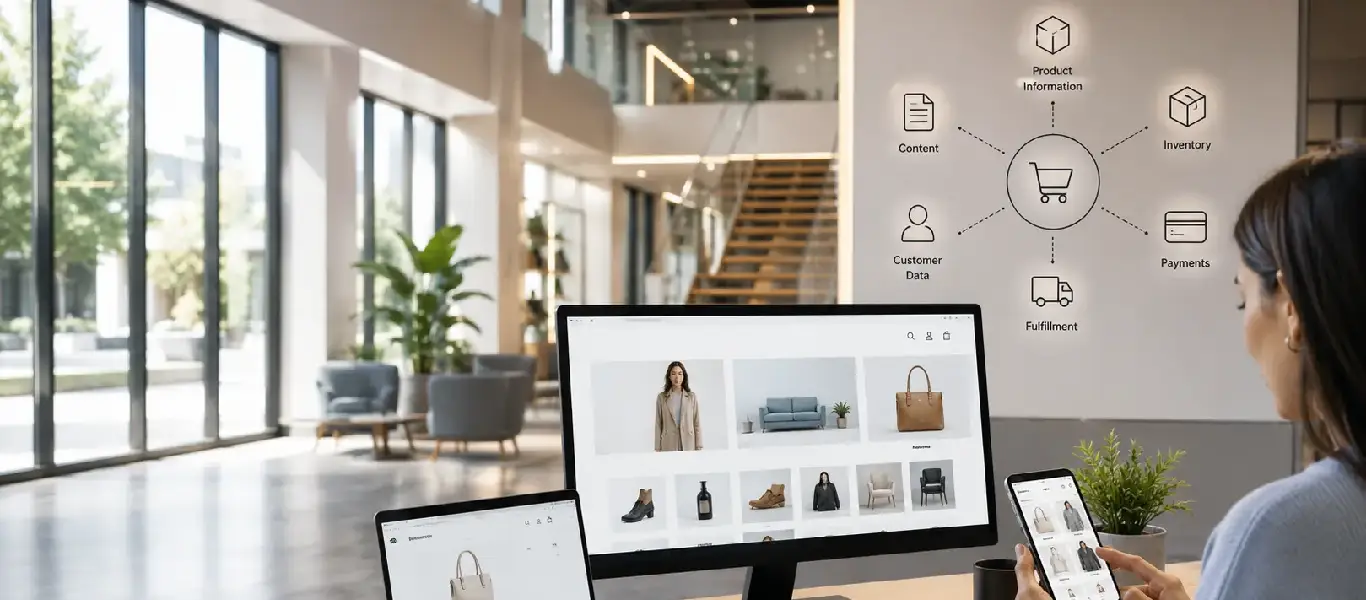




Point-of-sale systems are evolving beyond traditional transaction processing. POS is becoming an increasingly connected part of the retail technology ecosystem. Today, AI is being applied at the intersection of customer engagement, inventory visibility, and store operations. With agentic AI in retail, POS can evolve into an intelligent hub for real-time store operations. Agentic AI systems can observe store conditions, evaluate context, take approved actions, and learn from outcomes within defined business rules.
For enterprise retailers managing growing complexity across channels, store formats, and markets, this shift can create new opportunities to improve efficiency and decision-making. SkillNet Solutions helps retailers connect AI with the wider retail technology ecosystem to move from isolated pilots toward operational use cases. This helps retailers focus on measurable business impact across store operations.
What Agentic AI Means for Retail POS
Traditional POS automation typically follows predefined rules. For example, a traditional system may trigger a reorder when inventory drops below a threshold or automatically adjust a price when a valid discount code is applied. Agentic AI introduces a more context-aware approach.
Agentic AI responds to changing conditions, detects unusual patterns, and recommends or takes approved actions. These systems can be configured to operate within defined business guardrails, approval workflows, access controls, and human oversight. This allows an autonomous POS to respond to events such as a flash sale surge, a sudden competitor price change, or an unusual return pattern.
This differs from generative AI in retail, which focuses on producing content, recommendations, or conversational responses. Agentic AI takes the next step by acting on that context within defined guardrails, rather than simply generating an output for a person to review.
Why Retail POS Is Becoming the Control Center for Store Operations
Modern POS platforms connect critical retail functions, including checkout, customer data, loyalty, promotions, returns, inventory, and associate workflows. AI adds an intelligence layer that can help retailers interpret and act on this data in real time. A well-implemented retail POS solution can help improve transaction speed, personalization, operational visibility, and margin protection with AI. This improves operational visibility and support faster, more informed decisions across store operations.
From Checkout to Autonomous Checkout
Agentic AI can help reduce checkout friction while supporting revenue protection and a more consistent customer experience. Computer vision can support product recognition, frictionless scanning, and more intelligent self-checkout experiences. AI agents can flag pricing errors, coupon misuse, suspicious transactions, and payment issues in real time, enabling store teams to respond earlier. This can reduce the risk of transaction disputes and potential revenue loss.
AI can also analyze checkout queues and surface situations that need additional associate support.
AI Store Assistant: Helping Associates Sell and Serve Better
An AI Store Assistant can put real-time product, customer, and inventory information directly in the hands of store associates. Associates can access product details, stock availability, customer history, loyalty information, recommendations, and return or exchange guidance through a more connected experience.
The need is real: Salesforce research report found that associates today must learn an average of 16 different systems to do their jobs — up from 12 in 2023 — and that only 17% have a unified view of customer data. When associates can respond quickly and confidently, retailers improve service consistency and strengthen customer confidence.
That disconnect shows up on the retailer side too: in the same report, 81% of retailers say inefficient processes and technology drain store associate productivity. AI assistance addresses this directly, reducing the time associates spend searching across multiple systems. For new associates, faster access to relevant information supports onboarding and reduces the training burden for routine store processes.
Dynamic Pricing and Promotion Intelligence at the Store Level
AI agents can continuously monitor competitor pricing, inventory position, margin targets, demand signals, and promotion performance. This can support faster, more data-informed pricing decisions.
AI-assisted decision support can help retailers optimize markdowns for seasonal and slow-moving inventory. This gives retailers a more responsive approach to pricing and markdown decisions instead of relying entirely on static calendars. These capabilities can complement broader retail merchandising services by connecting pricing, inventory, demand, and margin decisions.
Smart Restocking and Predictive Inventory from POS Data
POS data provides continuous, store-level demand signals. Agentic AI interprets these signals to detect fast-moving SKUs, anticipate low-stock risks, and flag regional demand variations. When connected with inventory and order management systems, AI can help turn these demand signals into more actionable inventory insights. Accurate inventory visibility is foundational to effective omnichannel fulfillment.
Connected POS and OMS data can strengthen store inventory management, supporting replenishment, stock transfers, warehouse allocation, and shelf availability. This strengthens inventory visibility across the retail network and can support omnichannel services such as buy online, pick up in store (BOPIS), ship-from-store, and endless aisle.
Loss Prevention and Store Risk Detection
AI-powered loss prevention can help retailers reduce shrink while minimizing unnecessary customer friction. By analyzing transaction patterns, AI can surface repeated voids, high-value return clusters, price override misuse, and sweethearting. Computer vision can also monitor self-checkout activity and help identify potential scan errors or suspicious behavior in real time. This can be particularly useful in addressing self-checkout shrink without adding unnecessary friction for genuine customers.
The self-checkout risk is well documented: a 2026 study of 39 retailers by ECR Retail Loss found that stores adding self-checkout saw shrinkage by an average of 22% in the first year, with losses running 33% higher than comparable stores without it. Catching that gap in real time — rather than discovering it at month-end reconciliation — is where computer vision and agentic monitoring earn their keep.
The scale of the problem is why this matters: NRF’s National Retail Security Survey found the average shrink rate reached 1.6% of sales — $112.1 billion in losses — with roughly two-thirds of that loss attributable to internal causes such as employee theft and error, and about a third to external theft. Systems that can’t distinguish a routine void from a pattern of misuse leave that gap open; agentic AI is built to catch the pattern.
Oracle Xstore POS and the Future of AI-Enabled Store Operations
Agentic AI can add an intelligence layer across customer engagement, inventory visibility, associate workflows, and store operations. For retailers using Oracle Retail Xstore POS, AI can support more context-aware store and associate workflows. SkillNet Solutions brings extensive Oracle Retail Xstore implementation and modernization experience to these initiatives.
At the same time, retailers should consider a platform-agnostic AI strategy so AI capabilities evolve alongside changes in POS, commerce, and enterprise technology.
If you are planning to explore POS modernization more broadly, the principles remain the same.
What Do Retailers Need Before Scaling Agentic AI in POS?
Scaling agentic AI in retail POS requires getting the foundations right:
- Clean, accurate, and well-governed product, pricing, inventory, customer, and transaction data are essential.
- POS, OMS, ERP, CRM, e-commerce, loyalty, and merchandising systems must be integrated.
- Approval workflows, audit trails, and business guardrails must be defined before deployment.
- Store teams need appropriate training and change management support to understand how AI fits into their workflows.
- A cloud-ready, API-first architecture should support real-time data flows and future AI capabilities.
SkillNet POV: Agentic AI Works Best When Store, Commerce, and Operations Are Connected
Agentic AI in the store creates value only when POS, order management, merchandising, and the retail data connecting them are unified. Disconnected systems produce disconnected AI — pilots that impress in isolation but stall before reaching the register. Integration and data governance are the foundation; AI scales on top of that foundation, not around it.
With 30 years of retail expertise and an Oracle Retail implementation partnership dating back to 2005, SkillNet Solutions connects POS, e-commerce, marketplaces, merchandising, cloud infrastructure, and omnichannel systems into a single operational layer. That connected foundation is what lets enterprises scale AI across the retail environment, rather than confining it to a single channel or pilot.
SkillNet’s delivery experience spans 63+ countries, giving it the reach to apply this integration-first approach consistently as retailers modernize commerce and POS at scale.
FAQs
What is agentic AI in retail POS?
Agentic AI in retail POS refers to AI systems applied in point-of-sale platforms to observe store conditions, evaluate context, take approved actions, and learn over time within defined business rules and governance controls.
How is agentic AI different from traditional POS automation?
Traditional automation follows predefined rules. Agentic AI can respond to changing conditions, detect unusual patterns, and recommend or take approved actions without requiring every scenario to be manually programmed.
How can autonomous POS improve store operations?
An autonomous POS supports dynamic pricing, predictive restocking, real-time loss prevention, and associate assistance when connected with store and supply chain systems.
Can agentic AI improve retail customer experience?
Yes. It can support faster checkouts, personalized recommendations, better inventory visibility, and better-informed associates, which can improve customer satisfaction and loyalty.
Why is data integration important for agentic AI POS?
AI agents are only as good as the data they work with. Without clean, connected data, AI recommendations and actions can be incomplete or inaccurate.
Will agentic AI replace store associates?
Agentic AI is primarily designed to support associates by automating routine tasks and surfacing relevant information, while human judgment and customer interaction remain important.
Does Oracle Xstore POS support agentic AI?
Yes. Agentic AI can be integrated with Oracle Xstore to monitor POS data, provide real-time insights and automate approved store tasks. SkillNet’s AI framework supports agentic development and integration across the retail technology ecosystem.
How is agentic AI governed in a POS environment, and what prevents it from taking an incorrect action?
Agentic AI in POS runs inside business rules, approval thresholds, and access controls set in advance. Actions can be restricted, escalated and recorded in audit trails, preventing the AI from operating beyond its authorised scope.
What data and systems must be in place before deploying agentic AI in stores?
POS, OMS, inventory, and customer data need to be connected and accurate first.
Weak data quality or fragmented integrations can produce unreliable recommendations and actions.
What does it cost to add AI to an existing POS rather than replacing it?
There is no standard published cost. The investment depends on the use cases, data quality, integration complexity, security requirements and number of stores. Extending an existing Xstore environment can avoid the cost and disruption of a complete POS replacement, but an assessment is required to confirm the business case.
Conclusion: From POS Transactions to Intelligent Store Operations
Agentic AI is not intended to replace retail teams. Instead, it can help associates and store leaders work faster and make better-informed decisions. Retailers that connect POS, inventory, customer data, and AI across their operations can build a durable operational advantage.
Talk to SkillNet Solutions to explore how AI-enabled POS and connected store operations can support your retail modernization strategy.
Ref URL:


 Digital Engagement & Experience
 Omnichannel and Stores
 Engenharia
 Technology Consulting