


Introduction
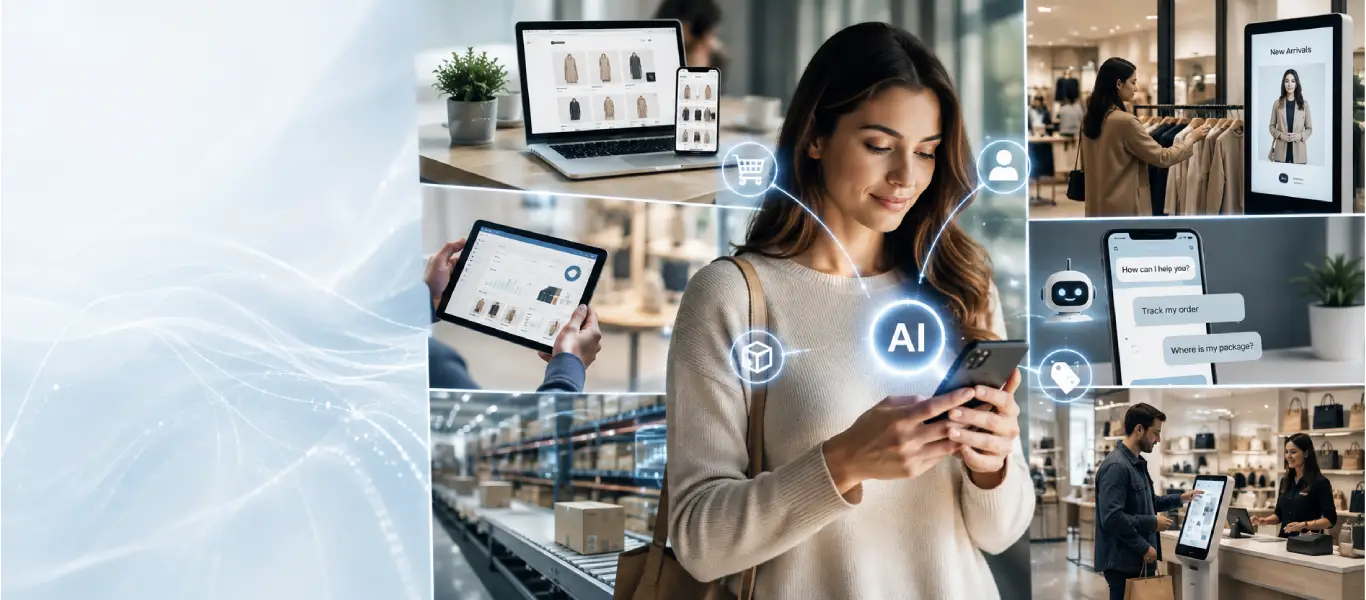
Retail brands are moving away from isolated artificial intelligence tests to focus on complete system integration. While basic pilots can prove a single retail use case, true operational scale requires linking front-end customer touchpoints with backend inventory systems. Using machine learning for real-time personalization, predictive stock optimization, and unified store operations helps companies build stronger customer retention. Succeeding in this competitive market requires fixing underlying data fragmentation and building clear corporate governance rules across your entire technology stack.
Are your customers walking away from their online shopping carts because your digital recommendations feel completely irrelevant? Competing in the retail sector used to center solely on lowering unit costs or maintaining prime physical storefront real estate.
But consumer habits have changed dramatically over the last few years. Today, individuals expect instant responses to service queries, highly specific product suggestions, and completely unified interactions whether they browse on a phone or walk into a physical store.
Many corporate leadership teams are investing heavily in isolated machine learning tools to solve these needs. However, a major maturity gap still separates basic technical experiments from true, enterprise-wide operational deployment.
A standard pilot program is useful for testing a single business case in a controlled environment. But scaling that technology profitably requires connecting your daily workflows, data repositories, and engineering teams across your entire brand.
Retailers that successfully transition to integrated retail AI solutions can improve buyer loyalty, customer retention, and customer lifetime value. They achieve these results because they can make fast, data-backed decisions at every step of the consumer journey.
From Reactive Retail to Predictive, Intelligent Commerce
Traditional retail operations rely almost entirely on historical reporting and reactive management adjustments. Teams review last week’s sales logs, analyze past inventory shortages, and try to mend broken customer experiences after the damage is already done. This backward-looking approach creates siloed internal data pools, mismatched regional assortments, and inconsistent messaging across touchpoints.
Transitioning to a predictive commerce model changes how your business interacts with the market. Instead of reacting to past events, an integrated intelligence network analyzes running data streams to anticipate consumer behavior before it happens.
This creates real-time decision intelligence across the retail business. Store teams, ecommerce managers, merchandisers, and service leaders can act on the same live signals, whether that means adjusting promotions, changing fulfillment priorities, or responding to sudden demand shifts.
This systemic shift relies on continuous data orchestration rather than dropping isolated software tools into separate departments. This operational change directly affects every single layer of your brand, from online personalization engines to physical storefront logistics and supply chain fulfillment.
Hyper-Personalization at Scale
Generic promotional blasts and broad demographic segmentation no longer influence modern shoppers effectively. Advanced intelligence engines analyze clickstream behavior, historical purchase records, immediate search intent signals, and localized loyalty interactions simultaneously to reshape the AI-powered retail customer experience in real time.
Processing these varied data points allows your digital platforms to serve dynamic product grids, custom pricing tiers, and relevant marketing messages to individual users.
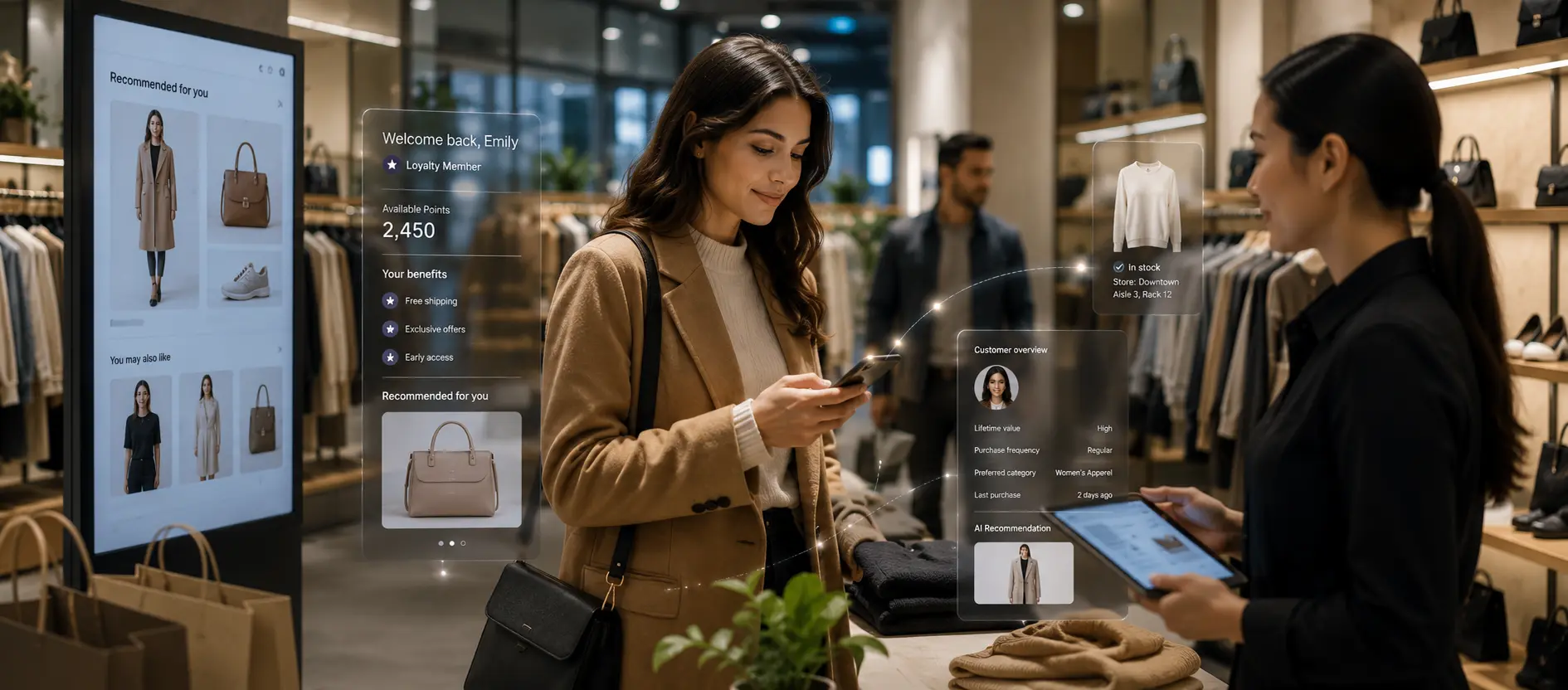
AI also strengthens loyalty program personalization. Instead of sending the same points-based offers to every member, retailers can recommend rewards, offers, and product bundles based on each shopper’s buying frequency, category interest, location, and past engagement.
Achieving this level of precision requires a completely unified customer identity framework. Your systems must recognize a shopper instantly, whether they open a mobile app, browse a web portal, or approach an Xstore POS terminal at a brick-and-mortar checkout lane.
True personalization is not just a collection of smart algorithms. It demands clean database consolidation, strict adherence to user privacy consent, and strong corporate data governance across all operational channels.
AI-Powered Customer Service
Generative communication tools and advanced virtual assistants now handle high volumes of routine consumer inquiries around the clock. These automated support platforms check shipping dates, process straightforward product returns, and answer detailed product compliance questions immediately without requiring human intervention.
Modern service systems also maintain complete conversation histories across separate communication channels. If a customer moves from an online web chat to a live phone call, they never have to repeat their issue to a new assistant.
AI can also support human agents through agent-assist tools. These systems summarize customer history, suggest next-best responses, surface policy information, and recommend escalation steps while the associate or contact centre agent is still in conversation with the customer.
But deploying these automated service tools introduces significant corporate training and governance hurdles. Your technical teams must train AI in retail customer experience models exclusively on approved internal knowledge bases, specific brand guidelines, and strict data security protocols.
Leaving a model unmonitored or poorly trained can lead to inaccurate automated responses that increase customer frustration and drive up escalation rates. When managed correctly, AI in customer experience (CX) operations lowers your support overhead, reduces resolution times, and ensures high service consistency.
Seamless Omnichannel Customer Journeys
Modern shopping behavior is inherently fragmented, with buyers frequently blending multiple digital and physical touchpoints during a single transaction. For instance, a consumer might discover an item on a social media feed, research specifications on a laptop, and complete the purchase via a buy-online-pickup-in-store mobile alert.
Artificial intelligence coordinates these separate interactions into a single, continuous experience by updating your master data logs in real time.
This constant connection ensures that online loyalty rewards point updates translate immediately to physical store registers. It also allows your backend systems to provide continuous service across channels.
Managing a successful omnichannel retail footprint is not a matter of simply launching new frontend applications. It is a fundamental data integration challenge that requires absolute synchronization between your customer relationship tools and inventory ledgers.
Predictive Demand Forecasting & Inventory Optimization
Inventory mismanagement remains one of the largest drains on corporate retail profit margins. Machine learning models analyze historical sales patterns, local weather developments, regional economic shifts, and social media trends to forecast exact product demand.
This statistical processing allows your procurement staff to optimize their supply chain choices, reducing the risk of costly warehouse stockouts while preventing capital from getting tied up in excess unsold merchandise.
This predictive visibility directly improves your broader metrics for customer experience in retail. When your inventory tracking is completely accurate, your brand can confidently deliver on its fulfillment promises, ensuring products are always available when a customer places an order.
Inventory visibility is the key link between forecasting and customer trust. When stores, warehouses, and ecommerce channels operate from the same inventory view, retailers can show accurate availability, avoid false promises, and route orders from the right location faster.
Integrating these predictive forecasts across your merchandising, warehouse management, and front-end sales channels stabilizes your operational costs and builds deep consumer trust in your distribution network.
Enhanced In-Store Experiences with AI
Physical retail locations are transforming from simple checkout points into highly interactive experience hubs. Modern AI in retail stores uses computer vision, smart shelves, and interactive digital kiosks to assist shoppers with product discovery and automate inventory tracking.
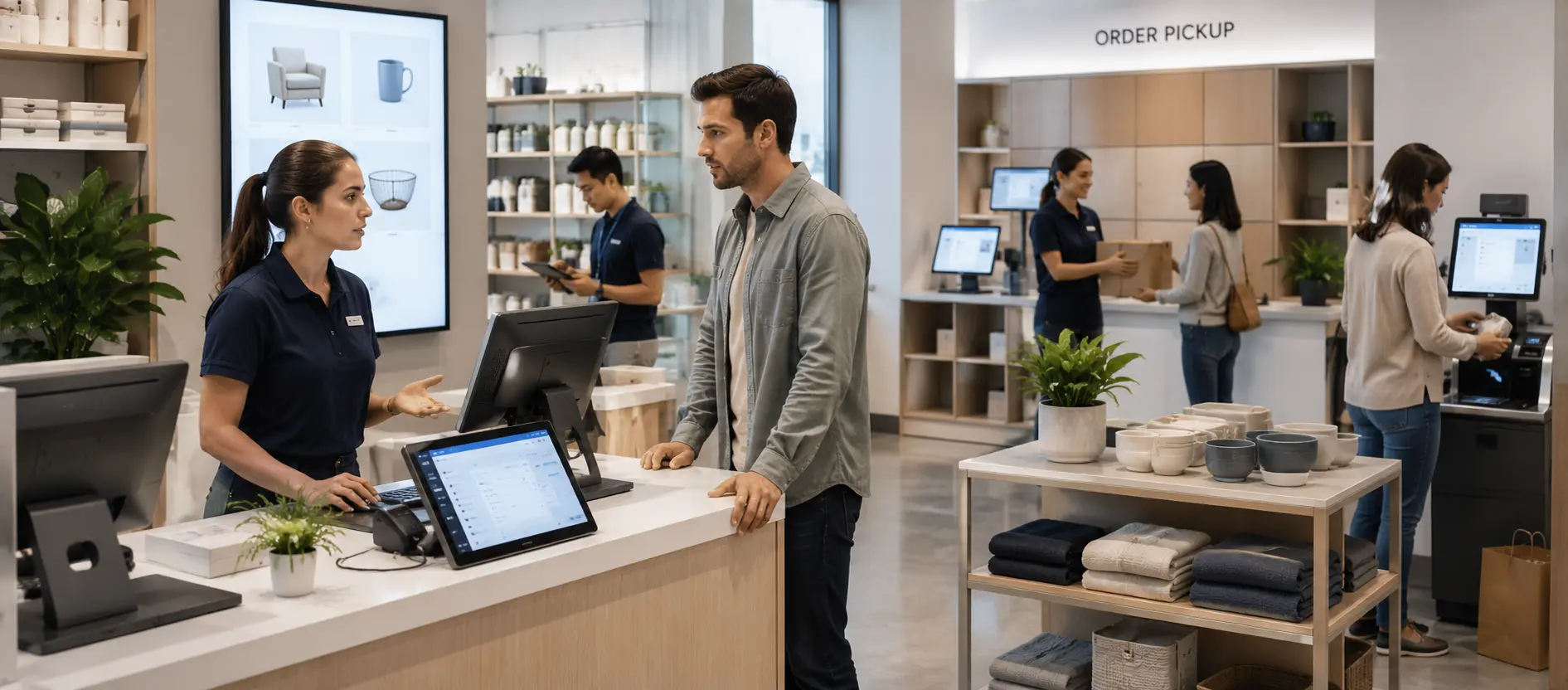
Frictionless checkout is another important use case, helping retailers reduce waiting time through self-service flows, integrated payment systems, and smarter queue management.
For example, automated cameras can track real-time queue patterns at checkout lanes, alerting store managers to open new registers before lines cause customer frustration.
These technologies provide continuous visibility into localized store operations by tracking product movement directly on the sales floor. This automated oversight ensures that when a popular item runs low on a display rack, stock runners receive an immediate replenishment alert.
Deploying these smart tools allows physical storefronts to operate with the same data-driven efficiency found in digital ecommerce environments.
Empowering Store Associates with AI Insights
Introducing intelligence tools to the retail floor is not about replacing your human workforce; it is about giving your staff the information they need to serve buyers effectively. Providing store employees with handheld mobile devices connected to a centralized data engine gives them instant access to customer purchase histories, style preferences, and real-time regional product availability.
This data access enables advanced assisted-selling workflows on the showroom floor. Associates can confidently recommend matching accessories, look up alternative sizes at nearby stores, and resolve customer service issues immediately during face-to-face conversations.
Combining human empathy with accurate data insights raises employee productivity, speeds up issue resolution, and provides a premium shopping experience that generic online stores cannot replicate.
The Real Challenge: AI Adoption Is Not About Technology Alone
The primary barrier to successful technical transformation is rarely the availability of AI software itself. Most enterprise brands struggle with AI transformation because they attempt to deploy modern machine learning models on top of fragmented, legacy IT architectures.
When your point-of-sale software, order management applications, and customer relationship tools cannot talk to each other cleanly, your intelligence models cannot access the unified data streams they need to function.
Succeeding with AI in retail industry deployments requires a thorough review of your underlying technical infrastructure, data governance standards, and internal team workflows.
Data quality is equally critical. AI models can only make reliable decisions when product, customer, pricing, inventory, and transaction data is accurate, current, and consistently defined across systems.
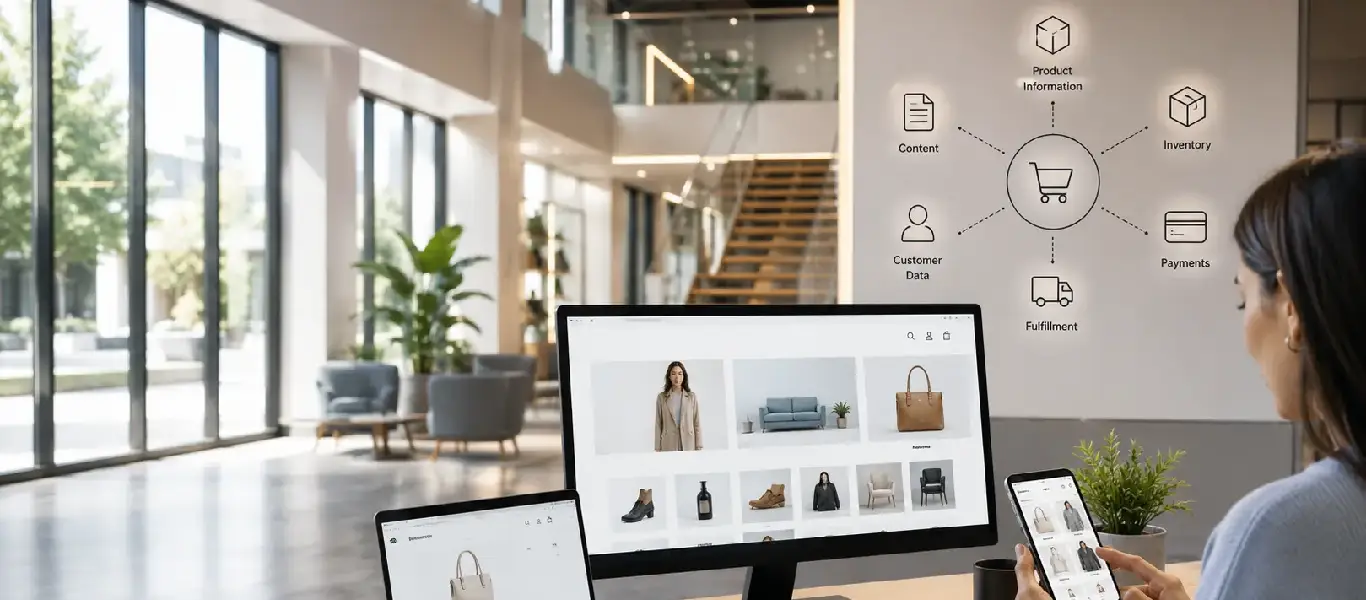
Investing in individual software tools without setting up automated APIs, clear data definitions, and cross-functional corporate accountability results in stranded technology pilots that fail to scale. True operational maturity requires building a flexible, integrated architecture that can move clean data smoothly across your entire organization.
SkillNet POV: From AI Experiments to Scalable Retail Transformation
Moving your enterprise away from isolated technology tests to build a scalable, profitable commerce footprint requires a dedicated focus on backend system integration. Dropping raw machine learning code into a chaotic technical environment simply creates high maintenance costs and software errors.
But this is where specialized technical execution from SkillNet Solutions changes the path of your digital transformation. We help global retail brands build highly connected, platform-agnostic architectures that turn raw operational data into clear, measurable business outcomes.
Our engineering teams focus on connecting your entire retail environment, linking modern ecommerce storefronts, advanced CXM analytics suites, and core Serviços de Merchandising de Varejo.
That means connecting POS, OMS, ERP, commerce, service, inventory, and merchandising platforms into one reliable operating layer, instead of allowing each system to work in isolation.
Whether your long-term roadmap requires upgrading legacy database systems or connecting new predictive tools directly to your Xstore POS terminals, SkillNet delivers the integration governance needed to keep your systems stable. This focus on real-time data flow allows your business to move past basic software pilots and build a high-performance commerce infrastructure that drives long-term customer loyalty.
Conclusion
Artificial intelligence has transitioned from a distant future concept into a core operational requirement for the modern retail landscape. The way consumers locate products, interact with support teams, and complete transactions is increasingly shaped by intelligent, data-driven systems.
Retail brands that look past short-term pilots to construct secure, integrated, and well-governed intelligence networks will define the next generation of customer experience management.Looking to operationalize AI across your retail ecosystem? Explore how SkillNet Solutions helps global retailers turn AI into measurable business outcomes.


 Digital Engagement & Experience
 Omnichannel and Stores
 Engenharia
 Technology Consulting