


Does your retail strategy still rely on the visual charm of a shelf? Years ago, a manager could walk a single store and fix a bad display. But when you scale to hundreds of locations across different time zones, that manual oversight disappears. Retail merchandising today is no longer an art performed on the floor. It is data science that runs within your systems. If your systems are fragmented, your growth will eventually hit a wall. You cannot scale a broken foundation.
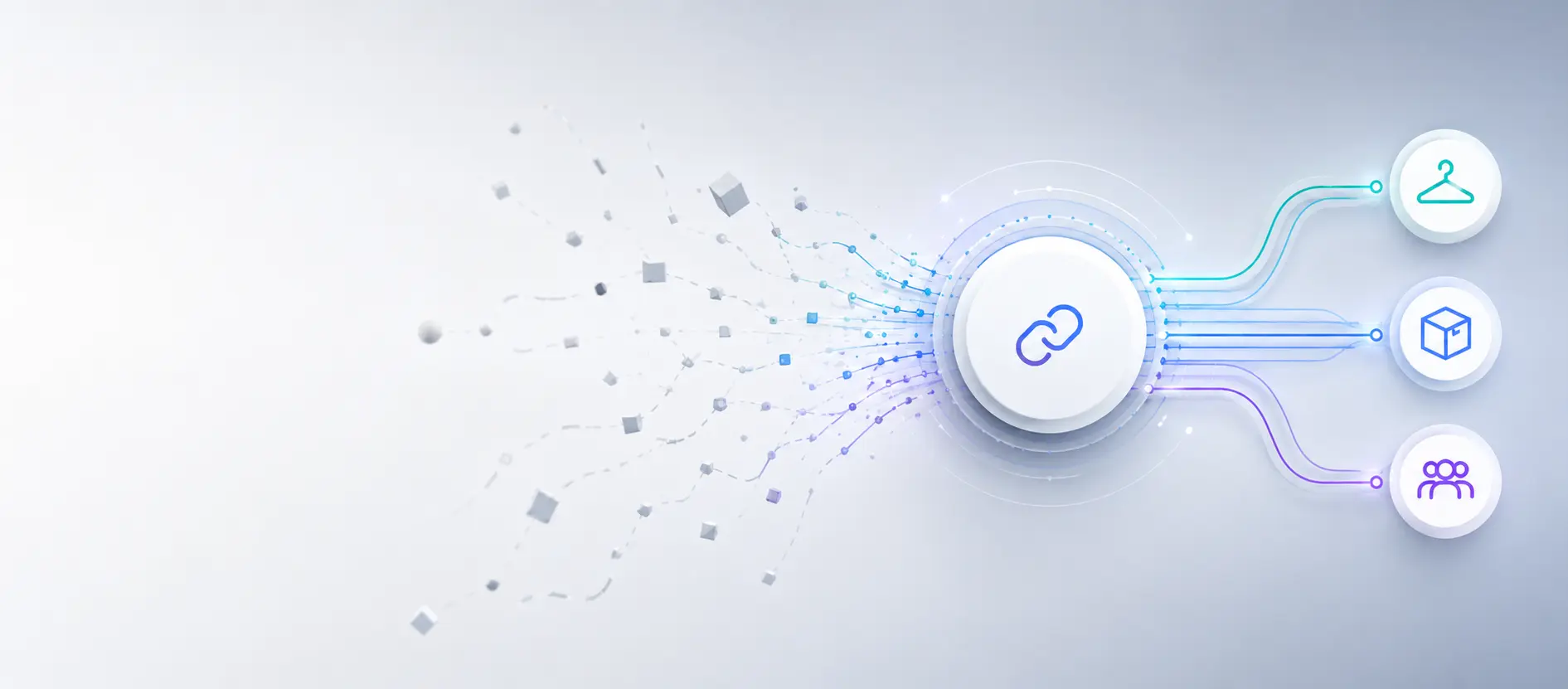
To scale effectively, retailers need a unified, system-driven merchandising approach that connects data, decisions, and execution.
Why Retail Merchandising Fails at Scale
Merchandising Has Evolved Beyond Store-Level Execution
Merchandising has moved far away from simple visual arrangements. It is now a data-driven operation. Your success depends on how well your inventory data, customer behavior, and shipping logistics talk to each other. When a brand expands, relying on human “gut feelings” about what to stock becomes a liability. Modern merchants must manage a digital ecosystem where every item on a shelf is backed by hard numbers.
Core Challenges Retailers Face
1. Disconnected Merchandising and Inventory Systems
Fragmentation is the primary reason scaling fails. If your merchandising team makes decisions without seeing live stock levels, you face a crisis. Marketing might promote a product that is sitting in a warehouse far from where demand exists. Such gaps lead to stockouts and lost revenue.
2. Lack of Real-Time Demand Visibility
Waiting for a weekly report is a risky approach in 2026. Consumer trends shift faster than ever. Without a live window into what people are buying right now, your business remains reactive. You miss out on peak trends and get stuck with products that no longer move.
3. Inconsistent Execution Across Channels
Many brands still treat their physical stores and website as separate worlds. This creates a confusing journey for your customers. They might see one price online and another at the register. A disconnected approach breaks trust and drives buyers toward your competitors.
4. Complexity in Scaling Across Regions
Moving into new markets brings new logistics and different buyer behaviors. A strategy that works in a city center may not work in a rural area. Without a central system to manage these gaps, your operations become slow and expensive.
5. Manual and Reactive Merchandising Processes
Manual work is the enemy of growth. If your team spends the morning on spreadsheets to figure out replenishment, you are already behind. Manual entry leads to errors and limits your team’s agility.
How to Fix Retail Merchandising at Scale with Modern Commerce Systems
1. Build a Unified Commerce Foundation
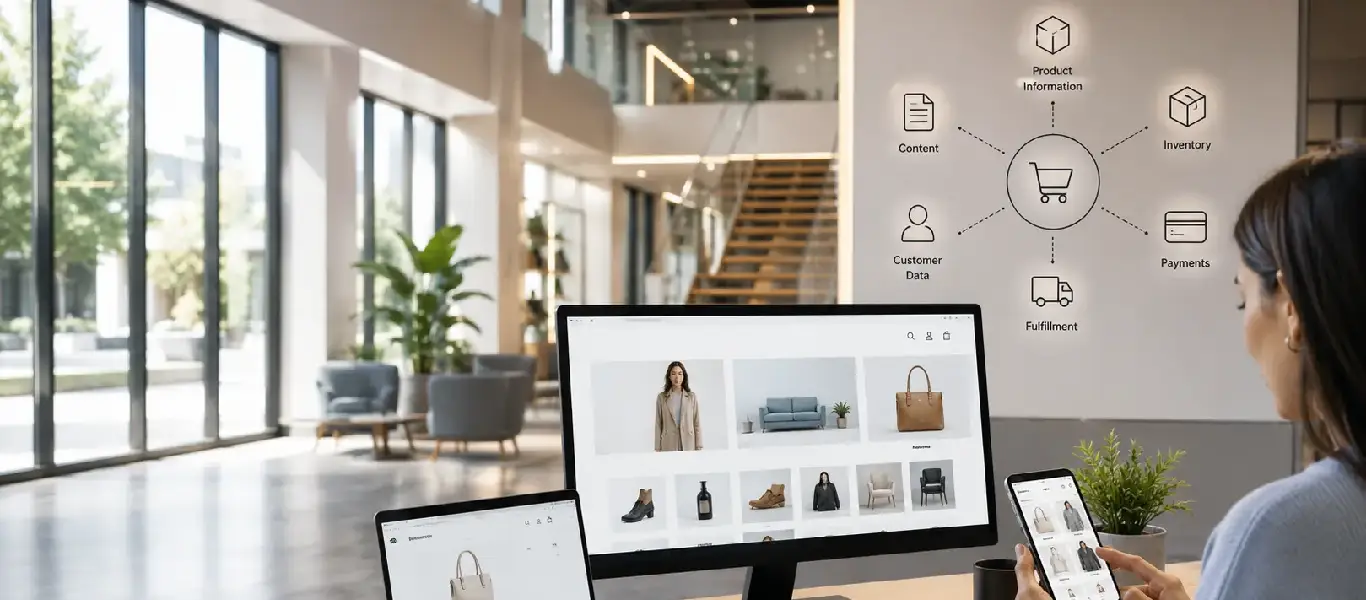
The first step is to bring your data together. You must integrate your merchandising, inventory, and customer systems. When a sale happens online, your physical store stock reflects it instantly. This creates a single source of truth for your entire company.
2. Leverage AI in the Retail Industry for Planning
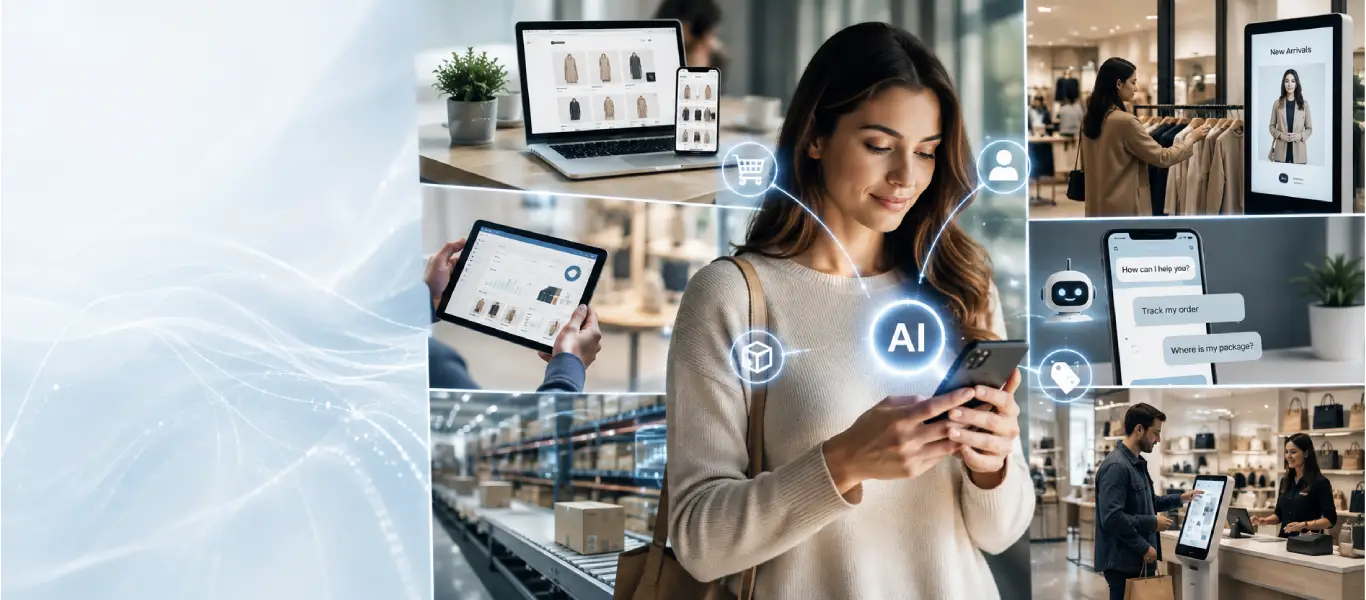
AI in the retail industry is a tool you cannot ignore anymore. Predictive analytics can now forecast trends with high accuracy. These systems help you decide what to sell and where to place it. By analyzing millions of data points, AI in retail removes the guesswork from your assortment planning.
3. Enable Omnichannel Merchandising Execution
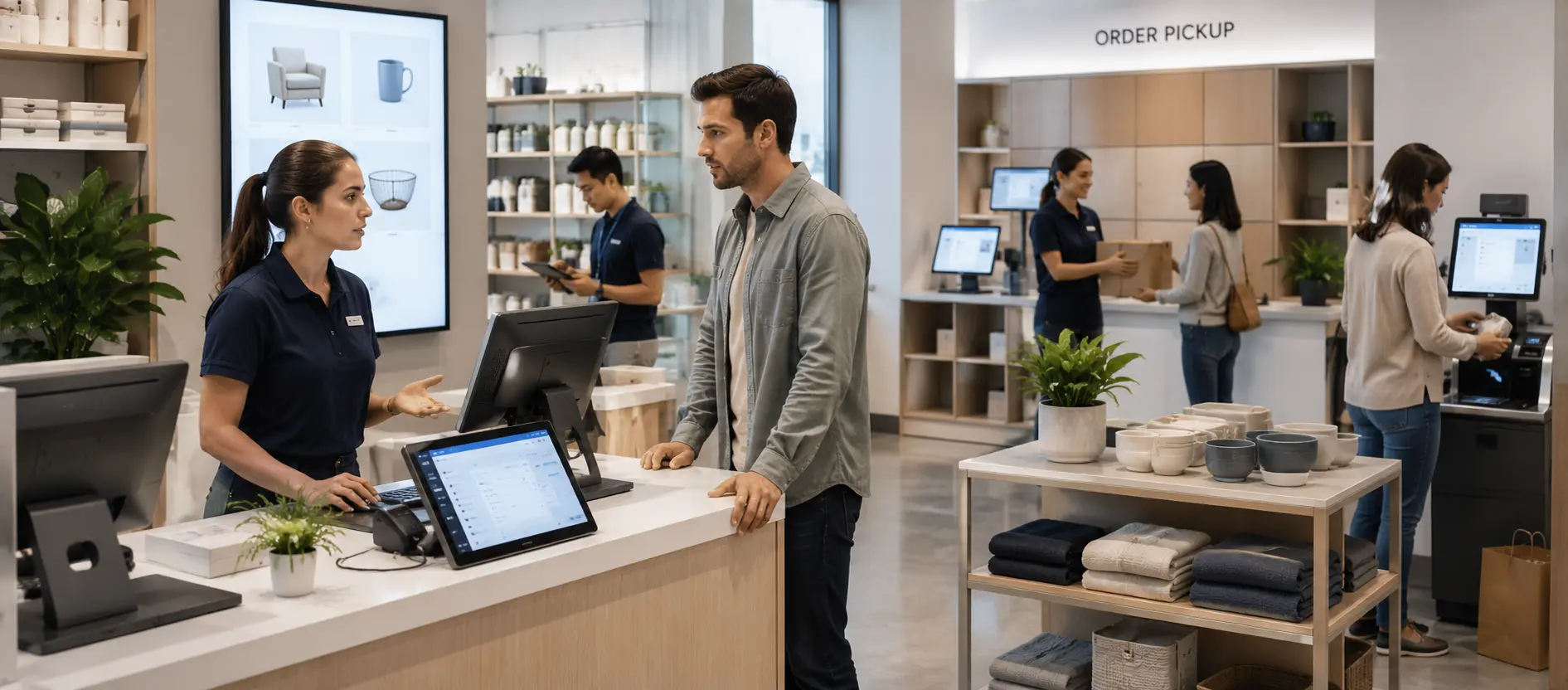
True omnichannel merchandising means your brand speaks with one voice. Whether someone uses an app or walks into a store, the experience must be consistent. Your pricing and deals should stay synced through a central engine.
4. Adopt Cloud-Based, Scalable Systems
Old servers cannot handle the sudden traffic spikes that come with global expansion. Cloud-based retail merchandising solutions give you the flexibility to scale without operational friction. They allow you to add new stores or regions without building a massive physical IT office.
5. Automate Merchandising Workflows
Automation helps you move faster. By letting software handle price updates and stock triggers, your people can focus on the big picture. This shift improves your speed and cuts down on costly human errors.
Real-World Industry Examples
Global leaders are already moving toward full retail digital transformation, and SkillNet’s client work reflects this shift in action. A rapidly expanding discount retailer operating across multiple countries replaced isolated, region-by-region operations with a unified delivery framework, breaking down data silos and establishing consistent technology rollouts across geographies. Similarly, one of the largest professional beauty product distributors in the U.S. connected its fragmented legacy systems, POS infrastructure, and customer engagement platforms into a single, cloud-based environment. This gave the business a unified view of inventory and pricing across all its stores and international markets, with automated alerts ensuring timely corrective action when exceptions occurred.
This kind of integrated infrastructure allows digital promotions to align with actual inventory availability. When online and in-store channels draw from the same live data, retailers can confidently offer experiences like click and collect or same-day delivery, knowing the systems behind them are accurate and synchronized. Digital transformation, as these retailers have shown, is not a one-time project but an ongoing capability. Those who invest in connected supply chains and unified data platforms are best positioned to respond to shifting customer expectations and scale their omnichannel operations with confidence.
SkillNet POV: Enabling Scalable, System-Driven Merchandising
SkillNet Solutions knows that merchandising at scale is a tech problem. We turn fragmented, manual processes into efficient, automated systems.
Our capabilities include:
Unified Commerce Integration: We connect your different apps into one high-performing system.
Omnichannel Enablement: We help you give customers a smooth experience across every platform.
Cloud-Based Scalability: We provide the digital bones that support your growth into new countries.
Data-Driven Decision Frameworks: We help retailers turn data into actionable merchandising insights.
And we have the history to prove it. Since 1996, SkillNet has delivered projects across 63 countries, bringing nearly three decades of retail expertise to the table. We do not just install software. We build the frameworks that help you make better decisions.
Future of Retail Merchandising
The next phase of retail is all about personalization. Composable architectures, already adopted by leading retailers, will become the default, allowing you to swap components without disrupting the entire system. Sustainability will also become a major part of how you stock your shelves, with retailers increasingly factoring sustainable sourcing and circular merchandising into their assortment decisions.
As a result, retailers will increasingly move toward real-time merchandising decisions powered by AI-driven personalization engines.
Conclusion
Merchandising hurdles are not just about how you work. They are about how your systems scale. In a market driven by speed and expectations, integrated retail merchandising solutions are essential to stay competitive.
You don’t have to do it alone. Explore how SkillNet Solutions can help you scale through better commerce systems.


 Digital Engagement & Experience
 Omnichannel and Stores
 Digital Engineering
 Technology Consulting