


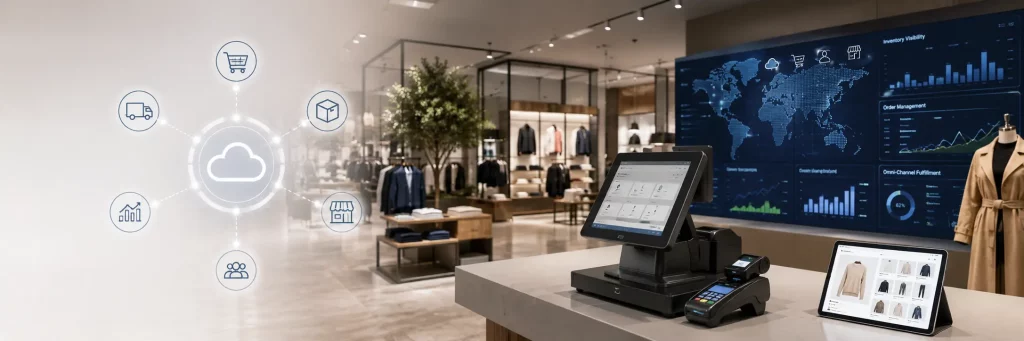
Oracle Retail & Commerce Solutions: Xstore, POS & Merchandising Guide
Talk to an Expert / Oracle Retail & Commerce Solutions: Xstore, POS & Merchandising Guide
The Complete Guide to Oracle Retail & Commerce Solutions
Modern enterprise retail demands absolute operational synchronicity between brick-and-mortar storefronts, digital commerce channels, and backend inventory ledgers. Legacy, disconnected systems create fragmented data silos that result in stock inaccuracies, delayed fulfillment, and friction at the point of sale. This comprehensive guide outlines how the unified Oracle Retail ecosystem addresses these issues. By centralizing operations through Oracle Xstore POS and Oracle Merchandising Cloud Services, retailers can secure real-time visibility, global regulatory compliance, and a scalable foundation for modern omnichannel commerce.
Are your storefronts, online digital channels, and inventory ledgers acting as completely separate businesses? Managing a multi-format retail operation with disconnected legacy software creates massive corporate exposure.
When your point of sale cannot talk to your merchandising engine in real time, operational friction accumulates rapidly. Out-of-stock notices surprise customers at checkout, stock allocations stall in central warehouses, and financial auditing teams spend weeks manually reconciling daily sales logs.
In an era where consumers demand immediate, flexible fulfillment choices, these internal delays damage brand reputation and restrict corporate agility.
For retail Chief Information Officers, IT directors, and operations executives, maintaining an outdated, fragmented software landscape is no longer just a technical inconvenience: it is a direct risk to your top-line revenue growth.
This architectural blueprint outlines how to consolidate fragmented point-of-sale platforms, inventory systems, and commerce pipelines into a unified enterprise engine using Oracle Retail Solutions.
Understanding Oracle Retail Ecosystem
The modern retail landscape requires tools that look far beyond the basic mechanics of scanning barcodes and processing credit cards. Many software suites handle retail operations as a series of isolated daily events.
By contrast, the Oracle Retail suite acts as a unified, end-to-end operational ecosystem designed to manage the entire lifecycle of a transaction, from initial supplier purchasing to the final customer receipt.
The architecture is built to centralize three primary pillars of modern enterprise retail:
- The Transaction Layer: Powered by Oracle Xstore POS to capture, process, and secure storefront sales across multiple formats and regions.
- The Core Operational Backbone: Driven by the oracle retail management system to handle master data, complex pricing structures, and vendor partnerships.
- The Unified Cloud Infrastructure: Supported by oracle cloud services to provide real-time data streaming, automatic software updates, and elastic compute scaling.
When an organization replaces standalone, siloed tools with this unified architecture, it eliminates the need for brittle, custom-coded middleware. Fragmented setups frequently drop data packets during nighttime batch processing, leading to costly inventory discrepancies.
By utilizing Oracle as the central foundation for your enterprise technology stack, you can create a single, verified source of truth for your corporate data. This integration allows your pricing updates, inventory counts, and customer profiles to flow effortlessly across all channels without manual intervention.
Read More: Helping Retailers Navigate Intelligent POS Choices
Oracle Retail Xstore POS: The Foundation of Store Operations
The point of sale is no longer just a static place where money changes hands; it is the primary touchpoint for customer engagement inside your physical brick-and-mortar stores. Oracle x store POS delivers a highly flexible, enterprise-grade storefront platform that handles intricate checkout workflows while maintaining high data accuracy.
The application is built to run reliably on multiple hardware form factors, including standard desktop registers, sleek touchscreen terminals, thin clients, and handheld mobile devices.
The core operational capabilities of the platform focus heavily on store efficiency and consumer flexibility:
- Centralized Transaction Logic: Executes complex promotions, item modifications, tax calculations, and multiple tender types using a single, consistent code base across the entire store network.
- Advanced Deal Engine: Evaluates running discounts automatically at checkout, ensuring the consumer receives the most accurate promotional pricing without eroding gross corporate margins.
- Integrated Omnichannel Flows: Handles modern buy-online-pickup-in-store (BOPIS) orders, cross-channel customer dashboards, and touch-free returns directly from the sales floor.
Selecting the right deployment strategy requires aligning your point-of-sale software with your specific storefront layout and customer traffic patterns. Whether you operate high-volume grocery lanes, specialized luxury boutiques, or sprawling department stores, the platform can be configured to match your unique brand requirements.
This adaptability ensures store associates spend less time fighting with rigid user interfaces and more time assisting consumers, directly increasing register throughput and lowering employee training overhead.
When and Why to Upgrade Your POS System
Running an enterprise on an obsolete point-of-sale version introduces severe technical liabilities and operational constraints. Legacy software platforms typically rely on outdated database structures and custom, hard-coded integrations that are difficult to modify.
If your IT team spends the bulk of its development budget simply maintaining old code, fixing random register freezes, or building manual data patches, your technology stack has hit its operational limit.
The corporate risks of running outdated software extend far beyond occasional register downtime. Obsolete point-of-sale setups leave businesses exposed to compliance gaps, data breaches, and slow checkout speeds that cause long lines during peak shopping hours.
Upgrading to a modern oracle retail point-of-service version provides immediate access to contemporary store features. This includes the intuitive Oracle Redwood user experience layout, optimized data processing speeds, and automated background system tools.
Moving away from legacy installations allows retail brands to lower their overall IT support costs, adapt quickly to changing consumer shopping patterns, and build a highly stable store environment.
Read More: 7 Features That Justify an Oracle Xstore POS Upgrade
Xstore Upgrade & Cloud Migration Strategy
Moving your point-of-sale infrastructure away from traditional on-premises servers and into a managed cloud environment requires a clear, structured plan. On-premises architectures require significant local hardware investments, continuous database synchronization, and heavy onsite maintenance from regional IT staff.
Transitioning to Oracle Retail Xstore Office Cloud Service (XOCS) removes the burden of managing physical back-office servers. This shift gives your corporate teams access to web-based administrative panels to push configurations, manage data updates, and view electronic journals in real time.
Retail executives can choose between two primary migration approaches depending on their risk tolerance and operational setup:
- The Phased Rollout: This method introduces the cloud-based platform to specific geographic regions or select store formats in distinct stages. It allows your teams to test internal configurations, validate custom data integrations, and train store employees with zero risk to the broader retail estate.
- The Full Flash Cutover: This strategy updates the entire store network during a single, pre-planned operational window. While it requires extensive preparation and rigorous stress testing, it eliminates the need to run separate, parallel software versions simultaneously.
Regardless of your preferred rollout method, addressing common technical challenges early is vital for success. Your migration team must carefully analyze existing network bandwidth at remote stores, clean up legacy master data tables, and thoroughly test offline transaction capabilities.
Building a resilient, offline-ready architecture ensures your cash registers stay fully operational and can securely process sales even during unexpected local network outages.
Read More: Oracle Retail Xstore Upgrade: On-Prem to Cloud Migration Strategies
Modernizing the Manhattan Commerce Stack: Core Capabilities
From omnichannel strategy to AI-powered personalization, our capabilities span the full commerce lifecycle, ensuring New York brands remain at the forefront of digital innovation.
Oracle Merchandising Cloud: The Retail Backbone
If the point of sale represents the face of your retail operation, the merchandising system serves as its engine. Oracle Merchandising Foundation Cloud Service (MFCS) centralizes all core corporate workflows, including vendor onboarding, purchase order generation, item attributes, and multi-region tax structures.
This cloud-native application connects your front-end store transactions directly to your backend supply chain, ensuring inventory figures remain entirely accurate across all distribution channels.
Using oracle retail inventory management within this cloud environment allows your procurement teams to track precise stock positions across warehouses, transit routes, and physical shelves. This continuous monitoring enables automated inventory allocation, optimized supplier delivery schedules, and dynamic markdown management.
By feeding real-time sales data from your registers straight into your merchandising engine, your business can eliminate common inventory tracking errors. This data clarity ensures you hold the exact amount of stock required to meet current consumer demand without locking up valuable working capital in excess warehouse inventory.
Read More: Oracle Merchandising Cloud Integration Guide
Compliance, Security & Regulatory Readiness in Retail
Operating a modern retail brand across multiple state lines or international boundaries requires strict adherence to shifting financial regulations, consumer data laws, and strict payment security standards. A data breach or a serious compliance failure can result in massive financial penalties, costly litigation, and permanent damage to your brand.
Oracle Retail systems are built to mitigate these systemic corporate risks by embedding security and regulatory tools directly into the application layer.
The platform simplifies global operations by utilizing localized country packs to automate complex tax rules, round currencies correctly, and handle regional invoice thresholds automatically.
On the data security side, the system uses advanced data tokenization and strict role-based permissions to protect customer payment profiles and meet global data privacy laws. These built-in security features keep your entire retail estate prepared for unannounced financial audits, protecting your operations from external threats and internal vulnerabilities.
Read More: Enhancing Security & Compliance in Xstore POS
Extending POS with Mobile & Modern Capabilities
The growth of mobile commerce has completely changed how consumers behave on the physical retail floor. Shoppers are accustomed to the speed of online digital ordering, and they expect the same fast response times when interacting with store associates.
Extending your traditional desktop point of sale with mobile capabilities helps bridge this gap between digital convenience and physical service.
Implementing mobile registers opens up several practical operational workflows on the sales floor:
- Queue Busting: Store associates can scan items and accept secure digital payments from customers waiting in long checkout lines, increasing sales velocity during peak holiday seasons.
- Assisted Selling: Employees use handheld tablets to pull up detailed product information, view alternative sizes, and check real-time stock levels without leaving the customer’s side.
- Endless Aisle Access: If an item is out of stock on the physical shelf, associates can order it from a central warehouse or a sister storefront directly from their mobile screen, preventing a lost sale.
Transitioning your team to mobile tools increases overall associate productivity by giving them instant access to real-time inventory and customer loyalty profiles. This mobility turns a standard checkout clerk into an informed brand advisor, providing a fast, modern shopping experience that drives repeat visits.
Read More: Extending Oracle POS with Xstore Mobile POS
Choosing the Right Oracle Retail Implementation Partner
Selecting your enterprise software platform is only half the battle; the real trick to long-term success lies in your implementation strategy. A poorly executed software rollout can lead to extended project timelines, budget overruns, and severe system disruptions that hurt daily sales.
To avoid these pitfalls, corporate leadership teams must partner with a specialized implementation group that deeply understands retail data migration and custom software integration.
Your chosen technology partner should possess comprehensive technical capabilities across the entire Oracle landscape:
- Proven Integration Expertise: The ability to connect your point-of-sale systems cleanly with existing ERP engines, legacy warehouse tools, and third-party logistics platforms.
- Smart Customization Strategy: A focus on minimizing modifications to the core software code, ensuring your business can accept future Oracle platform updates without costly rewrite cycles.
- Continuous Support Models: Providing round-the-clock technical monitoring, regular performance optimization, and onsite training tools for your store associates.
This is where specialized SkillNet solutions change the trajectory of your corporate upgrade. With over two decades of global deployment experience across North America, Europe, and Asia, SkillNet helps brands streamline their technical transformations.
By utilizing proven deployment frameworks, automated testing systems, and specialized integration platforms, SkillNet accelerates your time-to-market while lowering operational risks. This support ensures your enterprise platform delivers maximum value from day one.
Building a Future-Ready Retail Technology Stack
Sustained success in the retail market requires a flexible corporate technology stack that can adapt quickly to changing consumer habits. Legacy architectures that connect software via rigid, point-to-point data integrations cannot scale effectively.
A modern enterprise requires a flexible infrastructure built on unified APIs, microservices, and reliable real-time data streaming.
Connecting your front-end Oracle Commerce platform, point-of-sale hardware, and core merchandising engine allows your business to create a frictionless, real-time data flow. This connectivity ensures that when a customer makes an online purchase, your physical store stock updates instantly, and your warehouse teams receive immediate fulfillment alerts.
Investing in a cloud-ready infrastructure gives your brand the agility needed to launch new storefront formats, integrate advanced analytics tools, and deploy future commerce innovations with zero operational downtime.
Final Thoughts: Building a Scalable Oracle Retail Strategy
Consolidating your enterprise infrastructure with Oracle Retail is a proven strategy for securing long-term operational clarity and retail growth. As you build out your transformation roadmap, keep these core operational principles in mind:
- Disconnected systems create expensive data errors and slow down customer service across all channels.
- Oracle Retail operates as an end-to-end operational engine, not just a standalone point-of-sale tool.
- Oracle Xstore POS delivers a highly flexible, secure checkout experience across multiple register form factors.
- Upgrading to cloud-managed systems reduces internal IT overhead and eliminates reliance on local store servers.
- Real-time inventory synchronization is essential for running successful omnichannel pickup and return models.
- Mobile point-of-sale deployments maximize employee output and cut down customer checkout wait times.
- Selecting an experienced deployment partner is the most critical factor for completing projects on time and on budget.
Ready to eliminate operational data silos and build an efficient, future-ready storefront estate? Contact our team today to speak directly with an expert, evaluate your current technology architecture, and deploy a scalable, high-performance transformation strategy for your brand.
Get In Touch With Us
SkillNet Solutions, Makers of Modern Commerce, provides digital transformation consulting and technology services to companies that are looking to modernize their omnichannel touchpoints to better engage and transact with their customers.